
Careers Programme
GMS cares about offering careers information that enables students to make informed decisions that enhance their employability prospects.
Useful Websites for Students and Parents'/Carers'

Unifrog

Bucks Skills Hub

UCAS

Prospects
Career Guides and Publications for Students and Parents/Carers
The Parents’ Guide to University
The Parents' Guide to Green Careers 2025
The Parents' Guide to Green Careers 2026
National Careers Week 2025
GMS Careers Programme
Classroom to Careers Newsletters
Choices Guide July 2025
The Careers Team


Mrs Brunt, GMS’s careers leader, is a qualified careers advisor, registered with the Career Development Institute (CDI) as a Career Development Professional. Her registration provides assurance that she is fully qualified, abides by the CDI Code of Ethics and regularly updates her skills and knowledge.
To make an appointment to speak to our Careers Lead please email: mbrunt@gms.bucks.sch.uk
Careers education at GMS is managed by Mr Owen Hollyman, Head of Sixth Form ohollyman@gms.bucks.sch.uk
Careers Strategy and Vision
Great Marlow School believes that students should have access to careers education, advice and guidance. To this end, GMS has put in place access to advice and information that helps students choose suitable pathways to careers options. The school believes jobs that offer personal, economic and sustainable employment will lead to successfully fulfilled lives.
Every student is encouraged to work towards achieving their full potential by achieving their ‘personal best’ qualifications, which will open opportunities in ambitious career pathways.
Staff, together with career advisors, work to raise student aspirations. There is a “Next Steps’ day in the Sixth Form Centre and a further day when an ‘Interview Skills Workshop’ takes place. In the school calendar, Sixth Formers are scheduled a work experience week in July of Year 12.
- In KS4, Year 11 has scheduled careers interviews. They begin in the autumn term and continue into the spring term.
- In KS3, Year 9 students are given careers support when choosing their options for GCSE.
- The GCSE Options’ Evening, in the spring term, offers the opportunity for parents, carers and students to talk to staff about examination choices and career possibilities.
GMS is proud that 100% of our students progress onto further and higher education, training, employment or apprenticeships.
Careers Fair
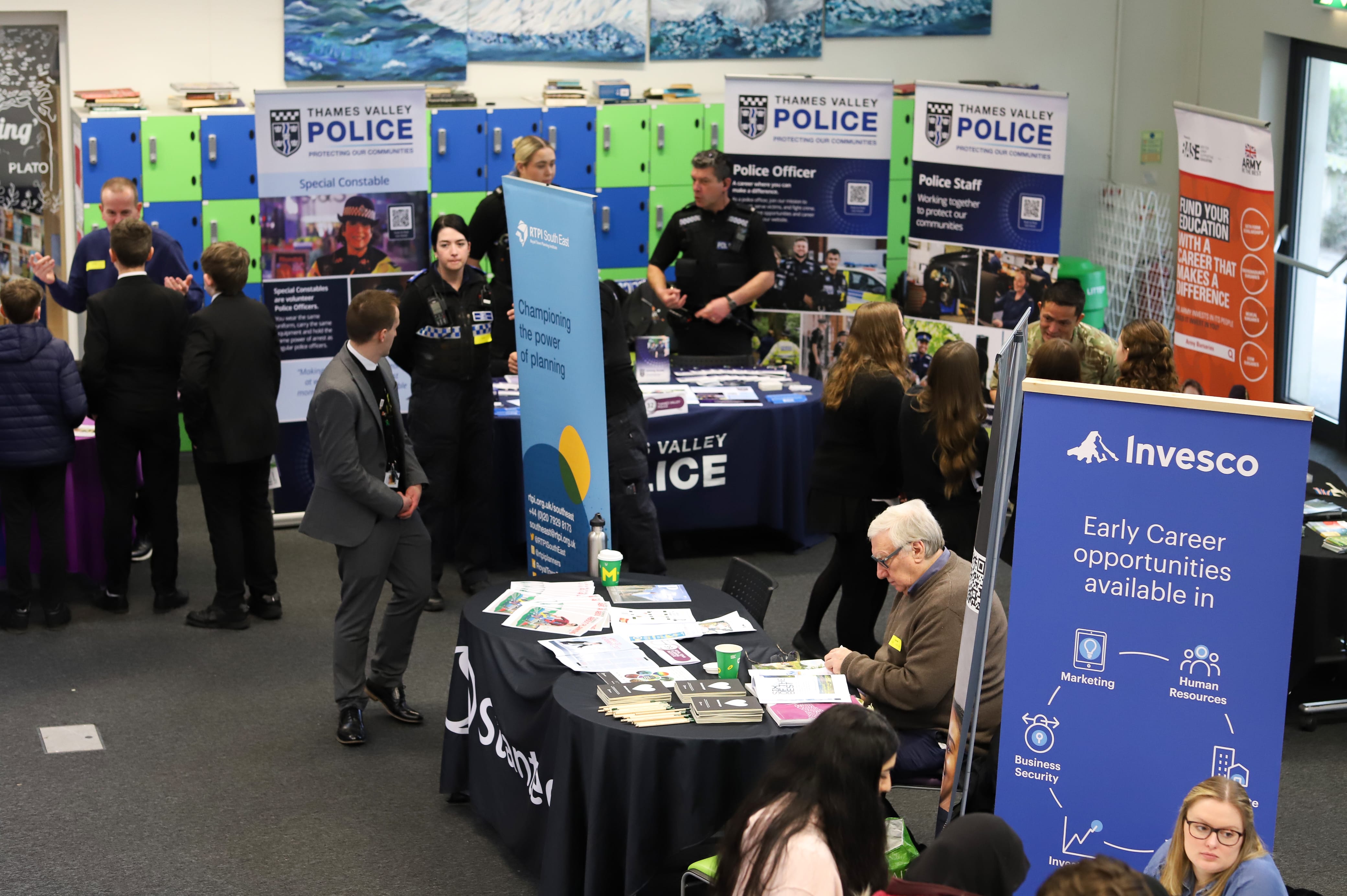
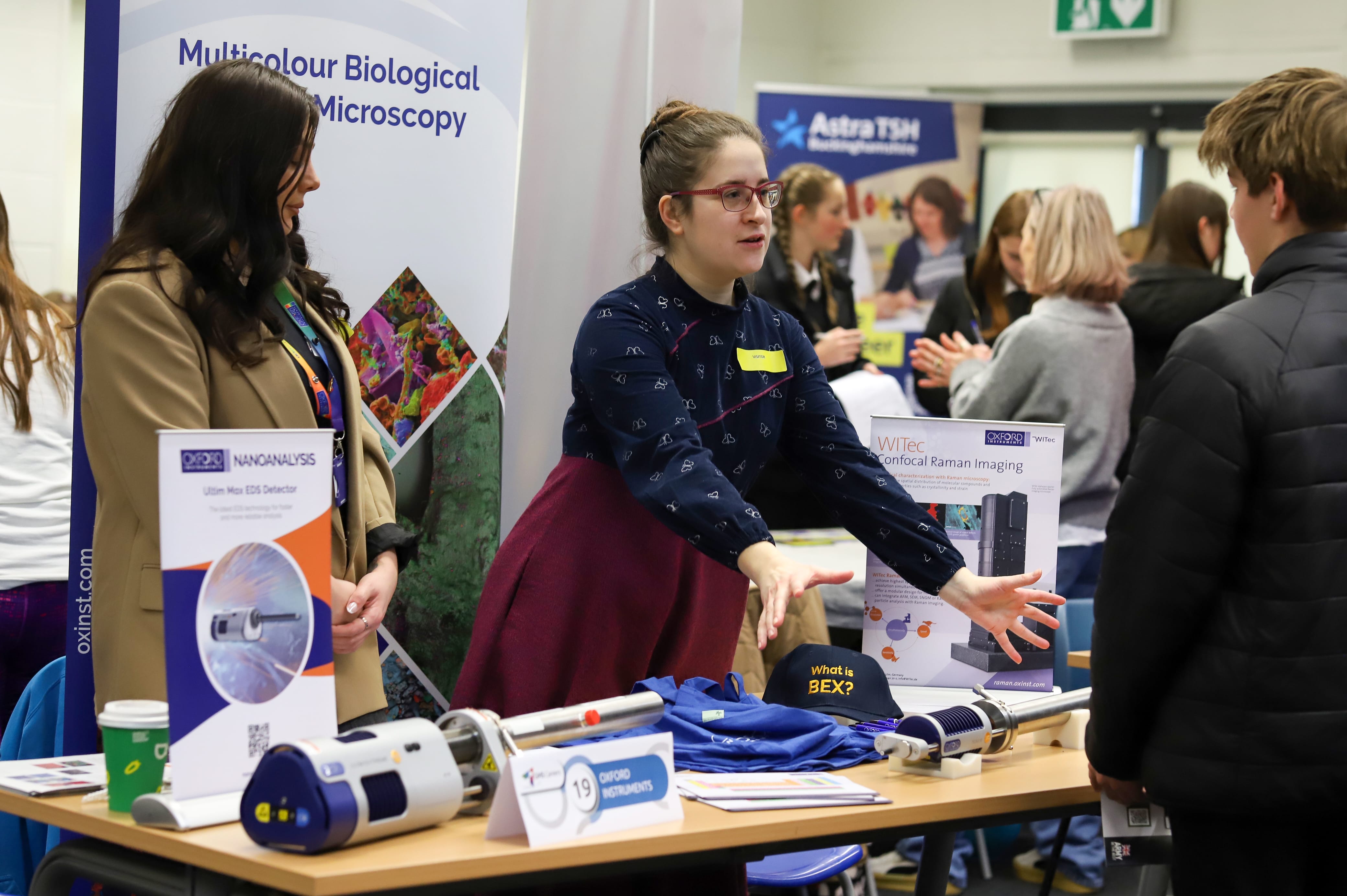
Great Marlow School has an annual careers fair. The school welcomes employers who wish to share their knowledge, experience and expertise with our students and offer guidance on career development.
Please contact our careers leader Maggie Brunt on 01628 495832 or mbrunt@gms.bucks.sch.uk if you are an employer who can offer careers advice and opportunities to our young people.


Provider Access
The school welcomes visits from employers, training providers and further and higher education organisations.
Providers who wish to request access should contact the Careers Lead Mrs Maggie Brunt on 01628 495832 or mbrunt@gms.bucks.sch.uk
Partnerships
Great Marlow School works closely with local employers and employees, including parents, carers and alumni of the school, as well as further and higher education providers.
GMS is part of the Bucks Careers Hub, a partnership of local schools who support each other with their careers programmes.
GMS is also supported by the Bucks Skills Hub, a government funded agency, designed to promote links between schools and businesses. This organisation provides GMS with an enterprise coordinator and two enterprise advisors who are volunteer senior employees of local businesses.
CEIAG Programme
What is the CEIAG Programme?
The ‘Personal Best’ initiative serves to ensure all GMS students reach their potential and feel positive about their achievements. In careers education, this translates to every student being helped to take the best possible options to further their ambitions.
GMS aims to support students in making well-informed decisions by providing access to differentiated, impartial and independent information and guidance about the range of options (including academic, vocational, apprenticeships and jobs) that are most likely to help them to achieve their goals. By helping students with decisions at crucial stages, informing them of all their options and introducing them to the world of work, GMS aims to prepare them for their career future in the pathway they choose.
Aims of Careers Education, Information, Advice and Guidance (CEIAG) at Great Marlow School is to:
- raise students’ aspirations and to broaden their horizons
- inspire and empower students to make informed realistic decisions at key transition points in their learning
- provide advice and guidance that is in the best interest of the student
- provide good quality independent and impartial careers advice to students that will inspire and motivate them to fulfil their potential
- provide opportunities to engage and work in partnership with employers, training providers, local colleges and other agencies
- provide opportunities to inspire students through encounters with employees
- develop enterprise and employability skills including skills for self-employment
- support inclusion, challenge stereotyping and promote equality of opportunity
- provide students in KS5 with the knowledge and inspiration to succeed in their chosen career paths
Our GMS Careers Map sets out the careers programme at GMS.
The CEIAG programme is monitored and evaluated annually. Reviewing the CEIAG Programme takes account of the school’s development plan to ensure it supports the school’s aims. GMS applies the Gatsby Benchmarks, a framework of eight guidelines that define careers provision in school and colleges.
Careers Guidance and Advice
Careers Resources for Students, Parents and Carers
There are many resources available that provide information, in addition to those already mentioned, the websites below that are a good place to start:
- Aspire Guide – this is an essential guide to careers, further education and university
- BBC Bitesize is a huge resource that offers options on what to study, taking exams and careers options
- Careers Box is a national careers film library
- Career Pilot is a careers information site and has tools to support 11-19 year olds
- Employability Skills: offers careers advice for secondary school students and their schools. Search for jobs, seek advice, find out about employers, research work experience, discover courses, research career choices, apprenticeships and university
- I Could.com has thousands of career videos of people from hundreds of careers
- National Careers Service offers careers advice and information on a wide range of jobs, training course resources and funding
- Success at School Careers Guide: aimed at students form 13-19 it offers information about searching for jobs, finding out about employers, discovering different types of work experience, lists courses available, offers options on career choices, gives details about apprenticeships and university.
- Talking Future is a toolkit for families to help career conversations
- The Skills Explorer is a digital tool that helps understanding of the skills needed across the UK job market.
- WorldSkillsUK AI Careers Chatbot – offers free access to a wealth of careers information through a user-friendly chat interface
Exploring the Job Market: Resources
- Bucks Skills Hub helps students understand the options available and how to make choices best for your requirements.
- Forage – offers free job simulations that are hands-on assessments (students perform real or simulated workplace tasks to assess their skills, decision-making, and readiness) it’s designed by employers.
- Future Learn helps students personalise their personal statement or CV. It is important that students show they have conducted research, for instance by accessing free online courses such as ‘massive open online courses’ (MOOCs). Other providers can be found for free on Unifrog
- Not Going To Uni is a website dedicated to finding apprenticeships, college courses or work experience for those opting not to go to university
- Prospects is a site that offers advice about work experience, internship opportunities and graduate careers
- Target Jobs – assesses graduate job descriptions to find out what each job involves and the qualifications and skills that are needed
- Uptree – offers free online courses that give students an opportunity to expand their career and industry knowledge but at their own pace with major brands.
Supporting your Child's Career Choices
Families want their children to believe in themselves so that they can lead happy, successful fulfilled lives. Young people look to adults for advice and guidance even if they don’t like to admit it!
The school encourages parents, carers and the community of wider family and friends to talk about careers: their experiences, plus the qualities, skills and interests required for different career paths.
From Year 7 onwards students are encouraged to think ahead and build themselves a profile, which can develop and expand as they journey through the school.
Families have a key role to play in the decision-making processes and the career paths chosen by students. Sometimes it is difficult for adults to know how involved to be. Should they adopt a hands-on role? What is the best way to give advice? When should an adult become involved?
Everyone has adopted beliefs about success, how to be successful and what constitutes a ‘good job’ or ‘ideal life’. Many people have personal opinions on the ‘right’ education paths but times have changed. Everything vocalised to children is based on personal beliefs and experiences. So long as personal biases are recognised, family conversations can be meaningful and worthwhile. Research by family members will ensure their teenagers are given the best possible support.
Communication is vital. Parents and carers who wish to access informed advice, please go to Unifrog ‘Careers Conversations with your child‘
The Parent Zone in Career Pilot provides information for parents and carers who wish to support young people in making the right decision about study and work.
How you can influence your child:
- Regularly speak to your child about various careers that you have encountered.
- Highlight the skills that your child possesses.
- Set a good example (socially, personally and professionally) for your child.
- Share positive attitudes, views and values.
- Support your child to adopt high aspirations regarding their education, career and life.
- Provide and enable your child to take opportunities to learn and develop.
Next Steps: Higher Education, Further Education
Resources for Higher Education/Further Education
FE Courses : is a Government’s overview of FE, find a course and funding.
Good Schools Guide – ia an overview of further education.
Sixth Form/Next Steps Guide – is GMS’s guide to the next steps after Sixth Form.
The Student Room – looks at careers in graduate job sectors as well as giving advice on applying to university.
The Uni Guide – offers advice on where to study and the route to success in securing your next steps goal.
UCAS – explores options available at university, the application process and careers.
Help with the Application Process: Psychometric Tests and Interview Practice
Psychometric tests are used by employers as part of a recruitment process; they can be ability tests or personality tests. As over 75% of organisations use psychometric selection tests, it is important that students have access to sites that offer practice tests, to ensure full preparedness. The list below offers several influential sites to explore.
Aon Practice Tests: covers all the different Cut-e assessments with explanations and advice on all the different tests a candidate may face. These practice tests target candidate preparation.
Assessment Day: the best site for “mini-tests” that fit into a 15-minute workshop rotation.
Barclay Life Skills: this site’s blurb says it, “develops skills, knowledge and confidence for working life and managing money”
Cappfinity: is a world leader in strengths-based assessment, providing award-winning recruitment and development solutions for organisations like PwC or Deloitte; their practice site is excellent for Year 13s.
Graduates First: offers aptitude practice tests; it is one of the most comprehensive platforms for both cognitive and game-based practice.
Institute of Psychometric Coaching
Psychometric Tests: is a website that offers a psychometric test guide commonly used during interviews for internships and first full-time jobs.
Saville Practice Tests: offer a comprehensive suite of aptitude tests used by employers to measure core abilities relevant for roles.
SHL Direct: is a test preparation and career centre. It is billed as being the “gold standard” used by the majority of Fortune 500 firms.
Recorded Interviews
Many organisations use recorded interviews as part of their selection process. This process involves a job seeking candidate taking part in a filmed online interview. The person recruiting can watch the recording afterwards to assess whether a person is suitable for the position before offering an opportunity to proceed to the next stage.
Barclays Life Skills site offers virtual interview practice.
Hireview is a provider that many firms use – students we would encourage you to practice recording an interview using this website. This video gives you some advice when preparing for your interview.
HireVue is a provider that many firms use, it offers pre-recorded video interviews where candidates answer questions on camera without an interviewer.
HireVue Practice Interviews once students have signed up they can access practice in-person interviews.
HireVue YouTube Interview Mistakes to Avoid: this video gives valuable interview advice.
Strengths Profile and Free Strengths Test, from Cappfinity, offers students free practice questions, afterwards it provides a report that is designed to build confidence and help students focus on their strengths. The report is useful for collating a CV and preparing interview questions.
Next Steps for those who need Extra Support eg SEND / Low Attendance
- Application Support provides comprehensive guidance to help navigate the process of applying for an apprenticeship.
- Apprentices with Additional Needs outlines and explains the various levels of support available for SEND individuals during their training.
- Autism and Learning Disability Services from Talkback helps individuals to understand their choices and access tailored, supportive community services.
- BCA (Berkshire College of Agriculture) offers additional learning support services to help students thrive in college life.
- Bucks College Group details the specialised SEND support and courses available for students at their campuses.
- Career Starter Apprenticeships is the official source for advice and guidance on starting your career through an apprenticeship pathway.
- Finding an Inclusive Employer is a helpful guide that offers practical advice on what to look for when researching apprenticeships.
- Reasonable Adjustments provides detailed information on Section 20 of the Equality Act, which requires employers to make necessary workplace accommodations for individuals with SEND.
- Refer a Young Person to The King’s Trust this site explains how to access help, training and resources from the organisation, formerly known as the Prince’s Trust.
- Rise Space offers specialist full and part-time SEND provision, utilising a developmental and lateral approach to wellbeing and re-engagement with the community and life. Through learning real-life skills, it enables young people to access the wider world with independence, confidence, pride and purpose.
- Scope Employment Advisers are available for students of 16 years old and over. They are experienced in talking through opportunities, aspirations and goals and can advise on an exact level of support required.
- Supported Internships provides young people with SEND and an EHC plan. Supported internships offer a unique opportunities to gain skills, confidence and experience for sustained employment through tailored support and workplace learning.
- The Buckinghamshire Council Family Information Service provides links to activities and organisations that can provide support with next steps.
- The Bucks Skills Hub offers ways to realise an individual’s potential, providing answers for those with a Special Educational Need or Disability, or anyone supporting them, who might be wondering what success looks like.
- The Preparing for Adulthood Page provided by Buckinghamshire Council gives detailed information about further and higher education, training, internships, work experience, independent living, finance and more.
Gap Year/Working Abroad
Why Consider a Gap Year?
A gap year offers an opportunity to gain skills and experiences, while giving time to reflect and focus on next steps.
A productive gap year can be valuable asset to advertise on a CV – many employers value the experiences students have gained if they’ve actively managed their time, set themselves goals, and stretched themselves.
A gap year can also enhance higher education studies – students applying for university can tailor their gap year so it relates to the planned subject area wanting to be studied.
Admissions tutors know that some students may take a little time to adjust to studying again and many gap year students are generally more focused and responsible.
What can you do on a Gap Year?
- Volunteering
- Travel
- Paid employment
- Work experience
- Part-time courses
Gap Year Ideas and Providers
Visit the UCAS page to find out more about gap years and organisations that provide a structured gap year experience.
Year Out Group (YOG) is an association of approved gap year providers, most of which are registered in the UK. These are generally aimed at young adults taking time out between school or college (or during holidays) and higher education or employment, or between higher education and a job. Such programmes are educational in a broad sense and include, for instance, courses, instructor training and cultural exchanges, expeditions, volunteer work, structured work placements.
Apprenticeships
What is an Apprenticeship?
An apprenticeship is a real job with training, which allows participants to earn while learning and leads to a nationally-recognised qualification. Apprenticeships take between one and five years to complete and are available in 1,500 occupations across 170 industries, varying from construction to manufacturing through to IT and the creative and digital sectors.
Apprenticeship Levels
There are various levels of apprenticeship that can be applied for, depending on skill-set and qualifications. Apprenticeships have equivalent educational levels:

All apprenticeships include elements of ‘on-the-job’ and ‘off-the-job’ training leading to industry-recognised standards or qualifications. Some apprenticeships will require an assessment at the end of the programme to assess the apprentice’s ability and competence in their job role.
Benefits of doing an Apprenticeship
- Earning a salary
- Training in the skills employers want
- Excellent progression opportunities, whether looking to study further or climb the ranks within the workplace
- Increased future earning potential
- Apprentices enjoy marked salary increases when they complete their training and those completing a higher apprenticeship could see increased earnings of an estimated £150,000 over their lifetime
- Learning at a pace suited to an individual with the support of a mentor
- Paid holiday
Entry Requirements
Apprenticeships are available to anyone over the age of 16 living in England. There are different entry requirements depending on the sector and job.
Salaries
The minimum wage for apprentices is set by GovUK but many employers choose to pay more than the minimum requirement. There are different rates of pay, which are age related, sector related and region related. Some higher apprenticeships pay much more, perhaps as much as £300 – £500 per week. More details on salaries and entry criteria in specific apprenticeship occupations can be accessed by looking at the vacancies on Find an Apprenticeship.
Degree Apprenticeships
Degree apprenticeships enable you to gain a full undergraduate or master’s degree while you work. Degree apprenticeships take three to six years to complete, depending on the course level.
Participants spend most of their time working, while studying part-time at university. Overall, 20% of time is spent studying versus 80% of time working. Some people go to university one or two days per week, others opt for study in short blocks, such as a week at a time.
Once an employer has been approached and a position offered, the employer makes contract with a university to deliver the academic content. Vacancies and application windows arise throughout the year and vary from employer to employer, therefore, it is important to keep up to date with research using specific employer websites and the search engine Find an Apprenticeship.
Degree apprenticeships are very popular and competition is high. Students will need to produce an excellent CV, LinkedIn profile and undergo a rigorous selection process; usually including recorded interviews; group assessment centre workshops; psychometric testing and skills based testing.
Unifrog
Unifrog Careers Platform
Unifrog brings information about all post-school opportunities, including every UK university course and apprenticeship scheme, into one place. This makes it easy for students to compare and choose the best opportunity for them.
This video provides parents/carers with an introduction to the Unifrog careers platform.
The Careers Library contains up-to-date labour market information for over 1300 different careers, with details about the required skills and qualifications for each one.
The Subjects’ Library gives advice about what qualifications are required to study a specific course at university.
Additionally, the platform helps students successfully apply for these opportunities by using Unifrog to write their applications, such as personal statements and CVs, and guiding them through the process, allowing teachers to give live feedback.
Students can record their key skills and achievements and build up an impressive portfolio over time.
Students access the platform by clicking a link in their welcome email, where they create a password. They can begin using the platform immediately. Many students log in to Unifrog using their school email address and password, this can be done from any computer, tablet or smartphone.
GMS encourages parents and carers to use the platform with their child. Support through the process of deciding their next steps is important, for a parent/carer access code please email Maggie Brunt on mbrunt@gms.bucks.sch.uk
Labour Market Information
Why do I need to know about labour market information (LMI)?
While many young people face tough competition for jobs, many employers report difficulties in recruiting people with the right skills. The working world has changed fundamentally over the past generation, creating an employment challenge caused by the demise of the job for life, the emergence of the knowledge economy and the loss of many jobs due to technological and globalisation changes.
As society transitions to net zero and embraces artificial intelligence, the growth of industries and job roles will continue to shift. It is, therefore, important that both young people, their parents and carers are aware of the evolving nature of the labour market and that young people are equipped to navigate a changing world.
Labour market information helps students to explore key aspects about a particular area of employment including:
- the sectors, industries and businesses that operate there
- the jobs that exist
- the number and type of job vacancies
- the sectors and businesses that are expected to grow in the coming years
- the travel to work patterns: ie the ways people commute to work from home.
- the kinds of skills which are emerging as needed
- pay and progression patterns
Careerometer is a free widget provided by the DfE offering access to labour market information
Bucks labour market and skills reports – for further information on what is happening in Buckinghamshire